India’s Nurses Takeover Global Healthcare
India's skilled nurses are redefining excellence in healthcare across the world
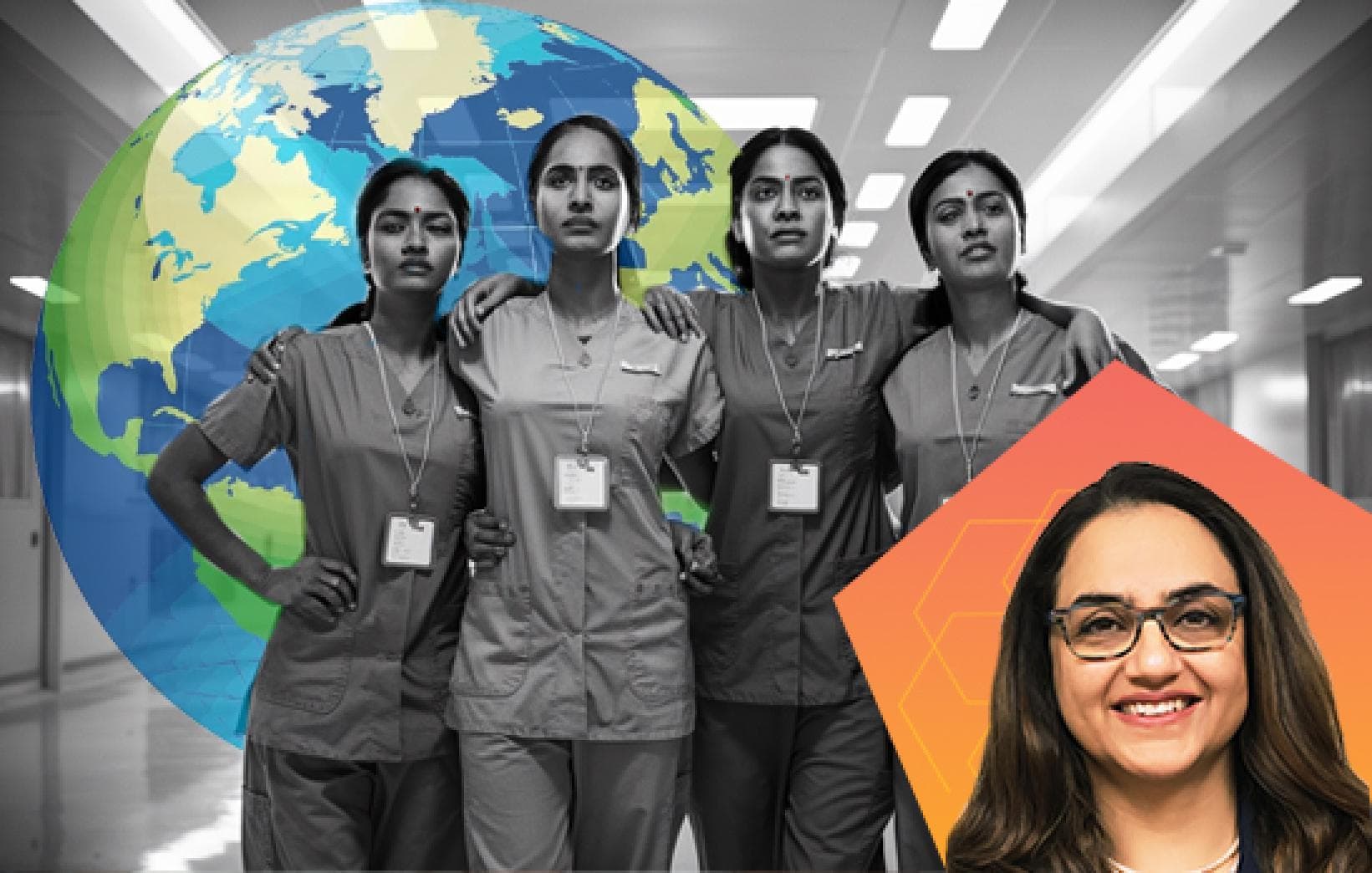
In the world of nursing, there's a lot more than meets the eye. In healthcare, the word "care" is right there in the name and nurses are the prime workers who provide care for the patients. And healthcare is not the same without the care component that nurses bring with their training and their hearts.
While doctors may write out the prescriptions, it's the nurses who are there day in and day out, making sure everything goes smoothly. They're the ones who provide the caring touch that's so essential in healthcare and the foundation of the whole healthcare system.
When we consider healthcare on a global scale, let's imagine the entire world as one interconnected unit. People face health issues for various reasons, and they may seek treatment in different locations, whether within their local area or in another country. This concept is what we call medical tourism.
Ultimately, when a person seeks medical assistance, they need to visit a healthcare provider. However, healthcare providers cannot work alone. They require a complete ecosystem to support them. Nurses form the edifice of the healthcare system.
With the growing population and increasing medical tourism in India, the demand for nurses is rising. However, according to WHO standards, we don't have enough nurses in the country. There’s a shortage of nurses globally as well. To address this shortage, it's crucial to expand nursing education since nursing is a profession that requires formal education, accreditation, and licensing. Therefore, the government's initiative to establish more nursing schools and colleges, announced in 2022, is a positive step towards meeting this demand and advancing healthcare for all.
Innovation and technology are also changing healthcare for the better. Things like AI and robots are helping doctors perform incredible surgeries and provide smarter healthcare. Nurses are also learning to use this technology to help their patients even more. Any one can identify some of the basic roles of a nurse - dispensing medicines, giving injections, assisting doctors, and more. Technology is going to transform even these basic tasks of nurses. Recently, I came across a video demonstrating a nurse using a transparent patch that illuminated a patient's vein. This innovative technology enabled the nurse to visualise the vein and pinpoint areas of strong blood flow. Armed with this precise information, the nurse successfully inserted the cannula on the first attempt, greatly minimising the patient's discomfort. In healthcare, ultimately, innovation and tech aim to ensure care and recovery for patients, and since nurses are a key part of this system, they will not remain unaffected by the blessings of technology.
While schools in India have started focusing on developing the technological skills of the children, I believe that the younger generation is growing up surrounded by technology, making it second nature to them. While this familiarity may be advantageous when it comes to adopting technology, it raises concerns about their reliance on technology for communication. As technology and with it, the world evolves, we must ensure they understand the value of human interaction and interpersonal skills.
Looking ahead, the education aspect of professions like nursing and medicine will experience transformations due to technological advancements. For example, in the USA even today, student nurses use simulations on PCs or VR setups to practise patient care. This is because the country’s regulations don’t allow them to get hands-on experience. Although it's a safe way to learn without real patients, it lacks human interaction, an essential aspect of nursing education. In contrast, in India, students receive hands-on training, providing them with more practical experience and valuable insights.
As remote consultations become more common and Artificial Intelligence aids in treatment planning and prognoses, nursing care remains rooted in a personal connection that technology cannot replicate. In healthcare, embracing technological advancements while preserving the essence of human touch and empathy is crucial for the future of healthcare.
Following the COVID-19 pandemic, there was a rise in demand for nurses trained in India from countries like Ireland, Germany, and the UK. Indians, in general, are known for their strong work ethic and competence. Regardless of the profession they choose, they tend to excel due to their dedication and hard work. The quality of education, the calibre of Indian professionals, and the excellence of our work speak volumes about us as a people. Whether in Israel, the US, or any corner of the globe, Indians are renowned for their hard work and proficiency. It's ingrained in our ethos.
This stems from a solid education system, especially in the early years of schooling (K-12), which provides a strong foundation. Of course, the system can adapt some lessons, but that’s true everywhere, and overall Indian education prepares individuals well for their future careers. Whether it's in fields like IT or nursing, Indians often meet the demand for skilled professionals worldwide because of their education and capabilities.
India's nursing education system is similarly robust. Nurses seeking international opportunities must pass licensure exams in their destination countries to demonstrate their competence. Once employed, they showcase their skills, compassion, and dedication, leading to a growing demand for Indian nurses. This demand underscores the quality of nursing education in India and the proficiency of Indian nurses. Across borders, hospitals recognise their capabilities and seek to recruit them, confident in their ability to deliver exceptional care.
What sets Indian nursing students apart is not just their academic prowess, but also their high emotional intelligence. They often come from strong family support systems, where the decision to pursue nursing is a collective one. It's not uncommon to find someone in their family already in the nursing profession, or they have close relatives who have pursued nursing themselves.
In contrast, I've observed that family support can sometimes be lacking among nursing students in the US. Many adult students returning to school for further education often juggle various responsibilities, leading to a different dynamic in the classroom. This can result in an age disparity between Indian nursing students, who typically enter nursing school right after high school, and their counterparts in the US.
In general, Indian nurses show exceptional emotional intelligence, competence, and dedication to their work. It's a privilege to work alongside them, and I believe their excellence extends far beyond healthcare and nursing.
As somebody who runs nursing institutes in both India and the USA it's an amazing experience across borders. I have a strong belief that Indian nursing students are truly exceptional. While I may be biased, I find them to be incredibly driven and respectful compared to their peers. It's truly a pleasure to share a learning environment with them.
And, the one aspect I find lacking in the education system in the USA is the teacher-student relationship. Having grown up in India, I deeply value the bond between teachers and students, where respect is inherent. However, in the United States, respect often needs to be earned, leading to a different dynamic that can be challenging to navigate.
In my interactions with students, I dedicate a significant portion of my time to discussing the importance of this relationship for effective learning. I emphasise that while students contribute diverse perspectives, the essence of knowledge transmission lies with the teacher.
India's classroom dynamics, emphasising this teacher-student bond, offer valuable lessons for education systems worldwide. While collaborative approaches have their merits, in formal education settings, establishing this rapport is paramount for fostering positive learning environments. As my students progress, we may converse as peers, but I am their teacher within the classroom, and this relationship is fundamental. Respect forms the cornerstone of this dynamic and must be accorded to the teacher.
When it comes to nurses' working conditions, while I don't have exact numbers, data suggests that nurses often prioritise patient care over their own health. Their work settings can also be tough and demanding. So, any steps taken to improve their work environment are crucial. For instance, in 2022, the Ministry of Health and Family Welfare proposed guidelines for better conditions. These include setting up Internal Committees, providing yearly health check-ups, offering childcare facilities, and limiting work hours to 40 per week. While I may not know all the details, I fully support these efforts.
Nurses frequently compromise their own health while tending to the well-being of others. This underscores the significance of observing Nurses Week, an occasion dedicated to recognising their unwavering dedication and hard work.
The concept of Nurses Week originated in the United States in 1982 during Ronald Reagan's presidency. Initially commemorating May 6th as Nurse Recognition Day, the observance expanded into a week-long celebration, coinciding with Florence Nightingale's birthday on May 12th. This annual event serves as a poignant reminder of the invaluable contributions made by nurses, deserving of our profound gratitude and appreciation.
While acknowledging nurses' efforts should ideally be a daily practice, dedicating an entire week to honour their compassion and commitment provides a fitting opportunity to express our heartfelt gratitude.