A VOICE For Gender Equality
The unwavering commitment of ‘Voice4Girls’ to empower India's marginalised youth.
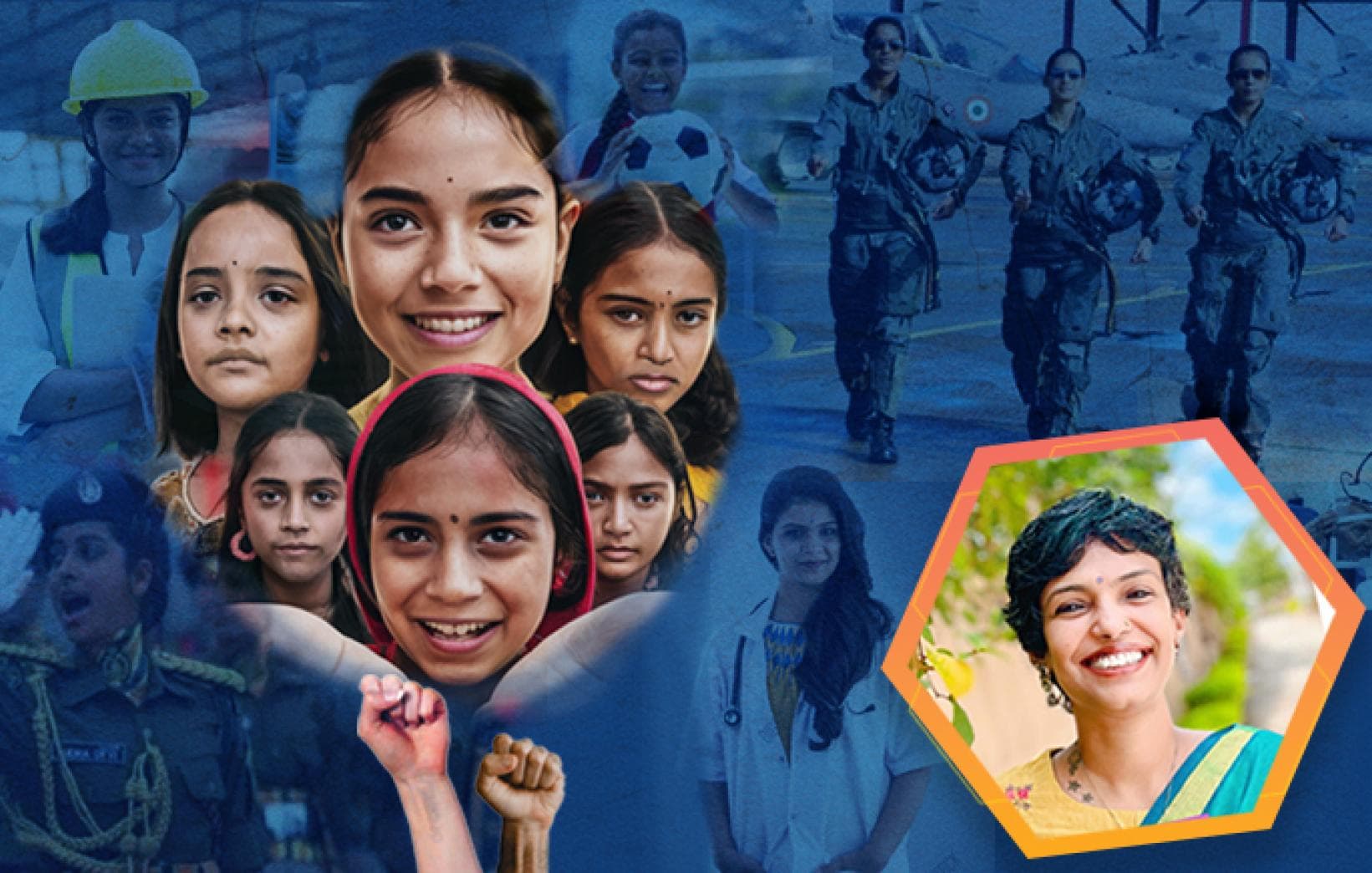
Gender equality has been and will remain a prominent discourse in all the narratives whether cultural, political or social throughout the world. It advocates the notion of equal rights, opportunities, and treatment of all genders, irrespective of their identity or expression. It ensures that all genders must have equal access to resources, opportunities, and decision-making processes in all spheres of life, including education, employment, politics, and social interactions. Gender equality also involves challenging and breaking down gender stereotypes, prejudices and discrimination based on gender identity.
Persistent gender disparity remains a formidable obstacle on the path to achieving true equality. Throughout history, women have faced marginalisation and discrimination across various facets of society, hindering their access to leadership positions and perpetuating the scourge of gender-based violence. In contemporary times, nowhere is this more evident than in the experiences of adolescent girls, particularly within marginalised communities.
In these communities, young girls encounter a myriad of challenges as they navigate the delicate transition from childhood to adulthood. Societal norms often dictate early marriage as the primary expectation following the onset of puberty, leaving girls grappling with the complexities of adulthood while still pursuing their education and nurturing aspirations for the future. These circumstances underscore the urgent need for comprehensive support systems tailored to the unique needs of adolescent girls.
Recognising this imperative, governments and organisations are increasingly focusing their efforts on initiatives aimed at empowering adolescent girls. By providing education on puberty, reproductive health, and their fundamental rights, these initiatives seek to equip young girls with the knowledge and skills necessary to navigate their circumstances and make informed decisions about their lives. With women constituting 48.4% of India's population, their pivotal role in steering the nation's economic and social development is globally acknowledged, showcasing their equal force alongside men in shaping India's trajectory.
Since our inception in 2011, Voice4Girls has commenced a journey dedicated to the empowerment of marginalised adolescent girls and boys across India. Operating as an NGO, our mission is to equip adolescents with the knowledge, skills, and support they need to navigate life's challenges and build brighter futures.
Our programmes are tailored to meet the specific needs of adolescent girls and boys, particularly those from rural and tribal communities. Through meticulously crafted curriculum and activity-based programs conducted primarily in government and low-cost private schools, we provide a platform for adolescents to navigate pubertal challenges, find their voices, strengthen their agency and find solidarity.
The camps operate within rural and tribal areas, recognising the heightened need and vulnerability of girls in these communities. By partnering with various departments such as tribal welfare, social welfare, minority welfare, and educational institutions like, day schools, and residential schools, Voice4Girls ensures access to girls who may otherwise be excluded from mainstream systems.
Voice4Girls' approach to intervention is both strategic and comprehensive, spanning over two years with three camps conducted during school breaks. These camps are strategically timed to coincide with breaks such as summer holidays, Dussehra vacations, and other significant festivals, ensuring maximum participation and engagement from the girls.
Throughout these camps, the girls are immersed in a curriculum designed to address various aspects of their lives. They are equipped with essential knowledge and skills related to gender and sexuality, poverty, menstruation, rights awareness, safety from violence, and critical life skills like negotiation, decision-making, leadership, and communication.
The curriculum is structured into three modules, with each module building upon the previous one to provide a comprehensive understanding of the topics covered. By the end of the program, the girls not only gain valuable knowledge but also develop the skills necessary to apply this knowledge in their own lives.
A particularly impactful aspect of the program is the emphasis on peer leadership. In the third module, girls are empowered to become peer leaders within their schools and communities. Through this role, they serve as role models and support systems for other girls, spreading awareness and advocating for change within their peer groups and communities.
By empowering girls to become peer leaders, Voice4Girls ensures the sustainability and scalability of its impact, as these trained leaders can continue to support and empower other girls long after the intervention program has ended. This approach not only creates a ripple effect of positive change but also fosters a sense of ownership and agency among the girls, empowering them to be agents of change in their own lives and communities.
It's truly remarkable to see the transformative impact of Voice4Girls' flagship programme, Her VOICE, on the lives of adolescent girls and their communities. Through various programs, a quarter of a million adolescents have been empowered to become leaders and advocates for change, spreading awareness on critical issues such as menstrual health and hygiene, safe touch, rights awareness, and future planning.
Voice programs not only equip girls with knowledge and skills but also foster a sense of solidarity and support networks within their schools and communities. These empowered girls go on to run sessions and initiatives, creating a ripple effect of positive change and serving as role models for their peers.
Recognising the limitations of residential camps, Voice4Girls has expanded its programmes to include initiatives for day school children as well. This inclusive approach ensures that girls from all backgrounds have access to the knowledge and support they need to thrive.
One of the key strengths of Voice4Girls' is the creation of Gender Transformative Safe Spaces (GTSS) approach with an emphasis on creating safe and inclusive spaces for learning. By recruiting and training young college students as mentors and facilitators, Voice4Girls ensures that classrooms become environments where girls feel comfortable opening up and expressing themselves without fear of judgement. GTSS enables an atmosphere that encourages meaningful dialogue and engagement, fostering a sense of camaraderie and empowerment among the girls. In our journey thus far, we have reached over 260,000 adolescent boys and girls, and we remain committed to our mission of empowering the youth of India for a brighter tomorrow.
India’s Progress in Gender Equality
India’s progress in gender equality has been propelled by significant advancements, underscored by several key factors. One pivotal aspect is the substantial increase in school attendance, benefiting both boys and girls. This surge has resulted in elevated literacy levels, particularly among girls, with many completing high school. A recent milestone in Punjab, where a female student clinched the top position in exams, serves as a poignant testament to this progress.
According to the World Bank India report, the evolution of literacy rates paints a compelling narrative. At the time of India’s independence, only 1 out of 11 girls was literate, representing approximately 9%. However, the current landscape showcases a remarkable transformation, with the women’s literacy rate soaring to 77%, while India’s male literacy rate stands at 84.7%.
Substantial investments have been directed towards higher education programmes for women, particularly evident in states like Telangana. The establishment of girls-only residential schools and colleges stands as a testament to this commitment. Initiatives such as the “KG to PG” programme further underscore the government’s dedication to providing comprehensive educational opportunities for women across all levels.
In 2018-19, the Ministry of Education launched the Samagra Shiksha Scheme, envisioning schools as a continuum from preschool to senior secondary levels. Additionally, the centrally sponsored scheme of Adult Education, known as ‘Saakshar Bharat’, aimed to enhance the literacy rate among adults.
A significant driver of India’s strides in gender equality is its education policies, notably the National Education Policy (NEP) 2020. This policy has been pivotal in enhancing literacy rates, particularly among individuals aged 15-24, achieving over 90% literacy for both genders with a gender gap of less than 5%. By prioritising education as an empowerment tool, the government has facilitated women’s access to opportunities, enabling increased participation in society. However, VOICE 4 Girls would like to appeal to the government to consider the right to secondary education so that adolescent girls have the safety net from the government to pursue mainstream education.
India has witnessed a notable drive towards the economic empowerment of women, marked by a surge in microfinance and support for women-led enterprises over the past decade. Investments in sectors such as agriculture have provided formal avenues of support, facilitating women’s transition from informal to formal employment.
One significant government initiative aimed at promoting entrepreneurship and providing financial assistance to micro and small enterprises is the Mudra Loan Scheme. Introduced by the Small Industries Development Bank of India (SIDBI) and the Ministry of MSME, this scheme offers collateral-free financing to micro and small enterprises. Notably, Micro and Small Enterprises owned or operated by women receive a guarantee cover of up to 85%, while other borrowers receive up to 75%.
The Telangana government actively encourages organisations like ours to participate in promoting girls’ education and investing in their development. We take pride in contributing to this movement, where substantial investments are channelled towards empowering girls and women. Recent legal provisions, including the Supreme Court’s ruling on two-year childcare leave for working women, are few positive signs that the government should continue if it wants to level the playing field.
In complementing government efforts, organisations like Voice4Girls play a pivotal role in advancing gender equality through comprehensive support and empowerment programmes for adolescent girls. By collaborating with government schemes and initiatives, such organisations amplify collective efforts, fostering a culture of gender equality and empowerment at the grassroots and policy levels. Together, these combined endeavours create an enabling environment where women and girls can thrive, thereby advancing India’s journey towards gender equality and overall development.