A Tech Power Emerges!
India’s technology prowess and robust economic growth will combine to make global impact
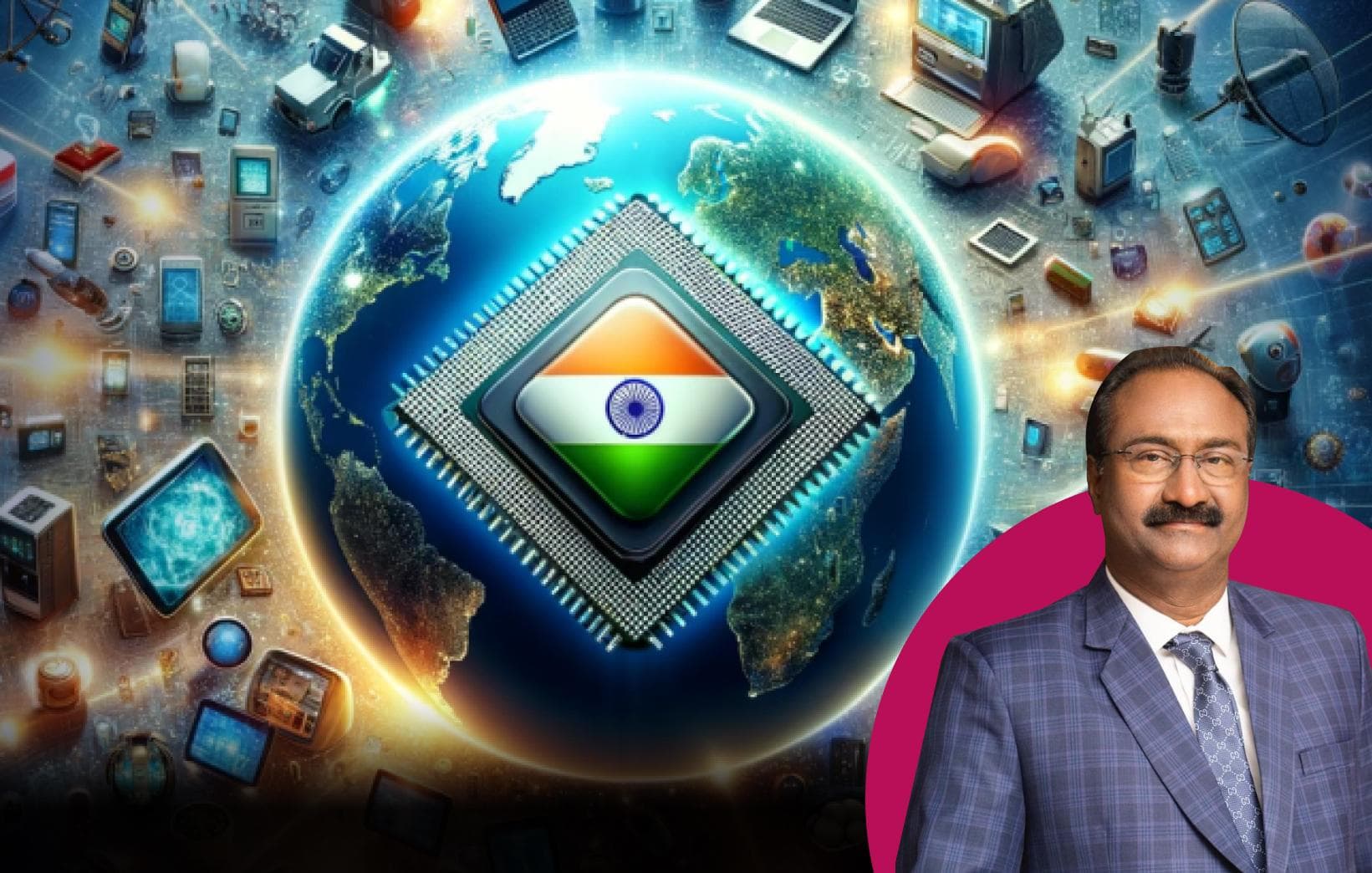
In the United States, where the buzz around presidential elections has encapsulated all spaces of public debate, the very mention of India’s rise delights the hearts of Indians like me. While there is already an Indian-origin woman occupying the high office of vice president, some others, Nikki Haley and Vivek Ramaswamy, were in the race for the most powerful post in the world. Many more are taking part in the most watched democratic exercise as advisors or campaign managers of presidential hopefuls.
The India story has in fact bedazzled not only the US, but the entire globe and positive projections about India’s rapid economic-strategic ascent have made it a fulcrum of multi-pronged hopes in international affairs.
This is the image of “Rising India” that is echoing in the US presidential campaigns and discussions among foreigners and NRIs. US President Joe Biden is in favour of upgraded ties with India and Prime Minister Modi is seen as an engine of economic growth and purveyor of peace. President Biden has been so impressed with this growing stature of India that on March 9, in his last State of the Union address, he emphasised on “stronger Indo-US ties vis-à-vis China”.
The bedrock of this “India moment” is pivoted around the blood and sweat of generations of Indians that came overseas and invested their talents to run the biggest economy of the world. Can you believe that 87% of IT companies in America – small, medium and large – are run by Indians? We already know that an Indian is heading Google (Sundar Pichai) and an Indian is heading Microsoft (Satya Nadella). A number of alumni of IITs and IIMs are CEOs of multinational firms in America. These are first generation Indians who came offshore with their talent and are shining with their brilliance. It speaks volumes about the potential of Indians.
In the post-Covid era, India overall emerged as the factory of outsourcing professionals for the world, not only for the US.
Now as the equations in the world are witnessing fast-changing ferment, India’s trade relations with the world will see an ever higher jump. American and European companies are withdrawing from crisis-hit China and shifting their set-ups to India. International firms are withdrawing from Russia and Ukraine as well and are eyeing India as their working station because the festering conflict refuses to end. It means that lots of products will be manufactured in India and PM Narendra Modi’s “Make in India” dream is taking shape concretely.
Take my words: India is going to emerge as a superpower of the world in the next 5-10 years. The writing is so visible on the wall.
This momentous moment will have its “Modi moment” as well. It seems very likely that PM Narendra Modi will return to power after general elections in June. His renewed vigour will surely take India to new horizons of progress and promotion of peace.
India, the global power, already reflects in New Delhi’s diplomatic lexicon that is more assertive, reassuring and clearly indicative that India is not shy of flaunting its strategic independence. This self-confidence oozes from the fact that India is on the cusp of becoming the third largest world economy. It already is the third largest armed forces of the world, and allocates the fourth largest budget for its defence expenditure. However, New Delhi’s ambitions, unlike other world powers, are not rooted in aggressive posturing. It has purposely crafted a 21st century foreign policy doctrine of “Vasudeva Kutumbakam” (world is one family) or “Vishwa Mitra” (friend of the world). This civilisational mantra is empathetic and believes in the philosophy of sharing the onus of world responsibilities rather than exploiting weaknesses of opponents and struggling countries. When the Covid wreaked havoc, India rose to the occasion as a “responder” and supplied free vaccines to the needy nations.
The rise of India can be credited to revolutions in the field of technology, telecommunications, infrastructure development, improving administration and batting for strategic autonomy in international affairs.
I belong to a generation that left India in the 1990’s. India was then a picture of desperation and today it paints a scene of complete changeover, with few areas no doubt still in need of attention. Name a sector, and India will be leading, if not coming second or third in the world. The airports are world class. The railway network, already the biggest in the world, has expanded to faraway corners, even wading through the hills into the Kashmir valley. Every town in India has engineering or medical colleges. Even foreign universities can set up their campuses in India now. They can sign articulation agreements with Indian universities and they can jointly venture into plethora of researches that will likely explore India through different aspects.
Thus, India produces the largest number of engineering and medical professionals in the world. They are serving in almost every corner of the globe, many of them, as mentioned in the case of Google and Microsoft, lead in their fields.
Artificial intelligence is the poster boy of cutting-edge technology these days. Tech-savvy Indians have already made gigantic strides in this field. One very visible aspect is the advent of AI in Indian Parliament and courts that are slowly turning into digitised legislature and judiciary. But India still needs to catch up in making its institutions AI-compliant. Some lacunae in AI operation and absence of clear-cut laws to regulate AI are major drawbacks in its use to the fullest.
AI-based automation of government services however will make them cutting-edge efficient as it will minimise the graft and pilferages, and will bring transparency and accuracy. Some government services have already begun operating through their specific Apps which, after a minimal training, can be operated by even rural folks. This is the right and desired direction of governance.
The AI industry in India is undergoing rapid evolution, witnessing the implementation of AI technologies across diverse sectors such as healthcare, education, and business. According to a report by Nasscom, India’s AI market is projected to achieve a compound annual growth rate (CAGR) of 25% until 2027, driven by technological advancements, research, and government initiatives.
India’s Fintech industry, as we know, thrives and flourishes on AI and other technology-supported mechanisms. But we have come across cases of thousands of fraudulent money transactions and other security breaches. One solution is technical and that is that it has to be made foolproof, equipped with impenetrable and robust defensive tools. The second is that Indian technological laws must be updated modern-day litigations. There must be urgent agreements with partner countries and even tech companies must be made accountable on this front.
So, like any other technological advancement, AI poses a massive risk and an array of complex challenges in cybersecurity. The major cyber threats leveraging AI include brute force, denial of service, AI-generated deep fakes and social engineering attacks. The rising potential of famous AI tools, such as ChatGPT, Bard, etc., is surprising.
According to a recent cybersecurity report, around 100,000 ChatGPT accounts have been compromised, leading to illegal sale of their data on the dark web. India alone reports theft of 12,632 credentials. Besides, the cyber attack on India’s premium medical institute – All India Institute of Medical Sciences (AIIMS) – was one of the biggest cyber scares for the country.
Though I am not a technical expert, I would say that one remedy is that the industry must defend itself against such threats by developing various solutions to test software quality that can identify and exploit anomalies. And another path is to fight such cases by being part of various international agreements, conventions and treaties that India is not part of thus far.
Aspiring India has to upgrade and guard itself on every front.
Dr Srinivas Rao Kaveti 🇺🇸
Deep Dive
US Powered by Indians: Indian immigrants are a significant driving force behind the creation of new engineering and technology companies in the United States in the past decade. An estimated 7,300 US tech startups founded by immigrants, 26 per cent have Indian founders, CEOs, presidents or head researchers.
‘Upgrading India-US Ties’: The US is standing up against China's unfair economic practice, standing up for peace and stability across the Taiwan Strait and revitalising its partnership with allies like India, said US President Joe Biden in his last Union of State address.